
The Artistic Process
My work begins with rough sketches on layout paper, with loads of reference books covering the floor. (It never fails, with all the books I have, I am always looking for that one elusive title that is hidden away somewhere!)
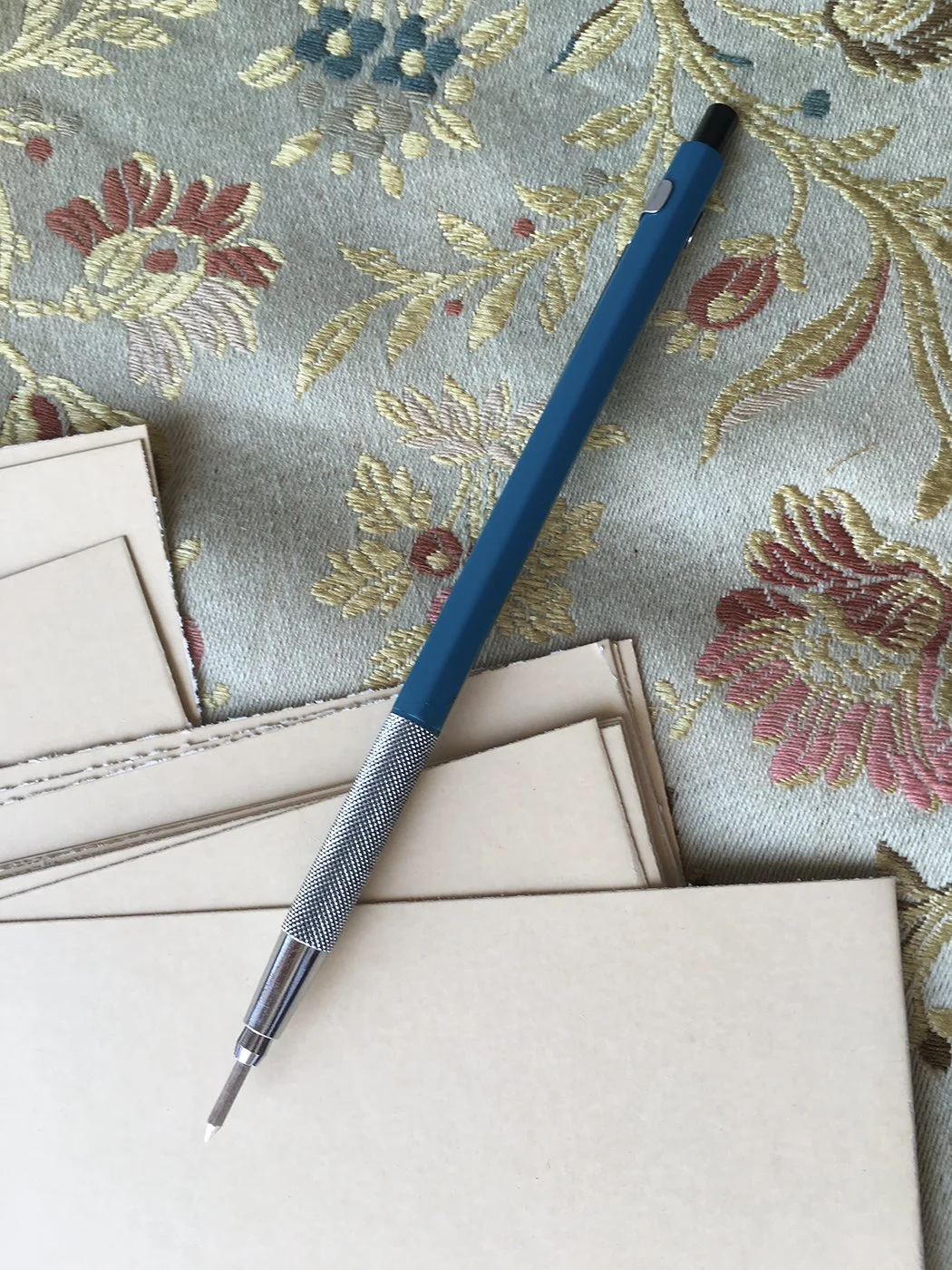
The only pencils I can use now are leads in lead holders. I need as sharp of a point as I can get, and regular pencils are never quite sharp enough.
Once I get a sketch somewhat settled, one of two things happens. I have this fantastic ancient Artograph projector, one that I learned how to use back when I went to my mother’s art classes at Orange Coast College in Southern California. It’s enormous, but nothing comes close to it for reducing or enlarging sketches that can be transferred onto my good watercolor board. It needs a very dark corner, and contortion to get beneath the lens to redraw carefully onto the final surface.
When I do not not have access to that, I use Saral transfer paper, a graphite paper that works by placing graphite side down and sketch on top, tracing the image so it transfers lightly via graphite onto the final board. The problem with his method is that only a fuzzy ghost line shows up, so I have to redraw all the details and they almost never match the sketch I want to end up with. Additionally, I have to erase the graphite, and once you transfer onto your final board, you want to avoid as much erasing as possible. I don’t want to risk lifting any fibers that I plan to paint over.
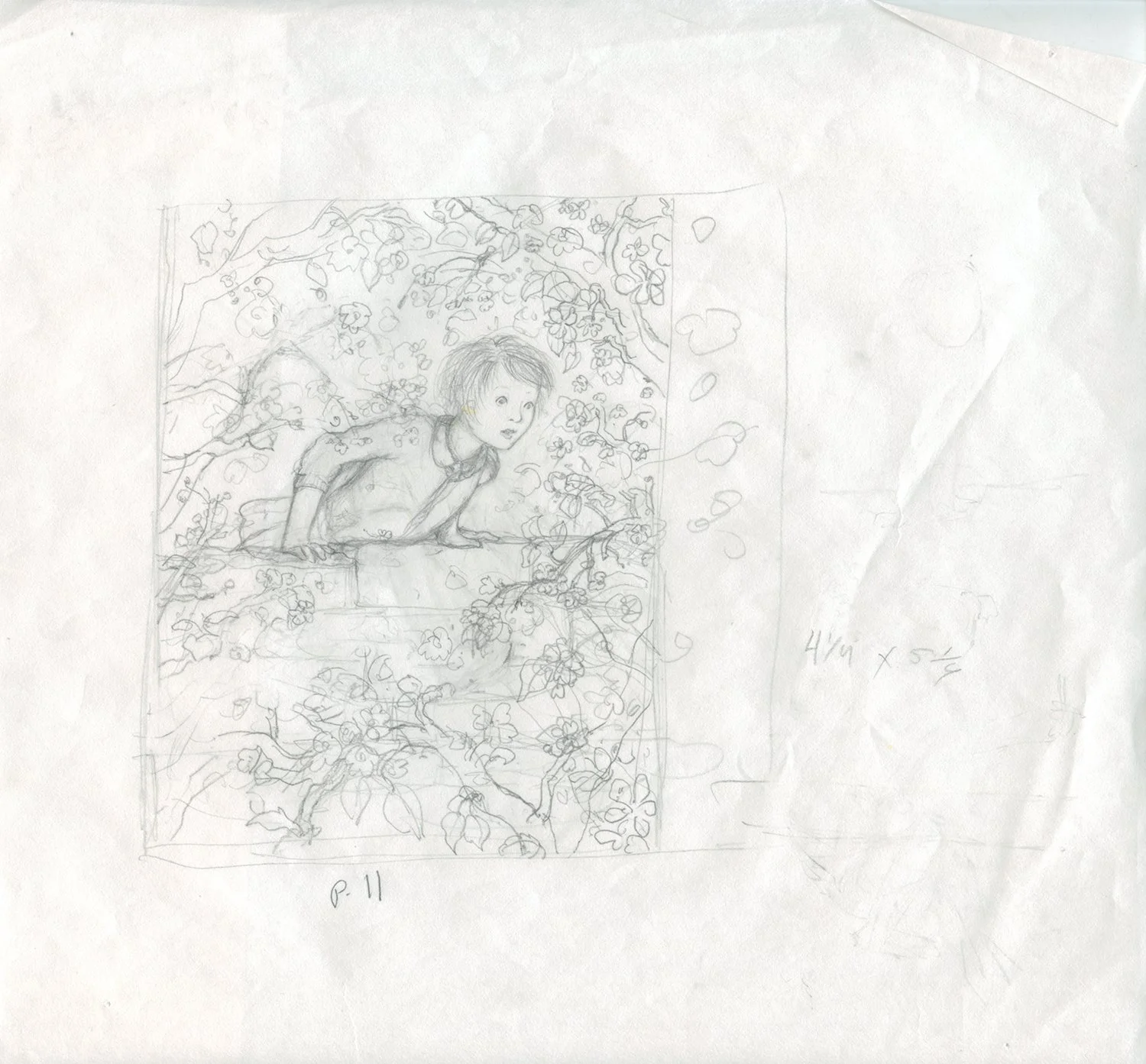
The initial sketch for a page from Mandy by the great Julie Andrews, published by Harper Collins
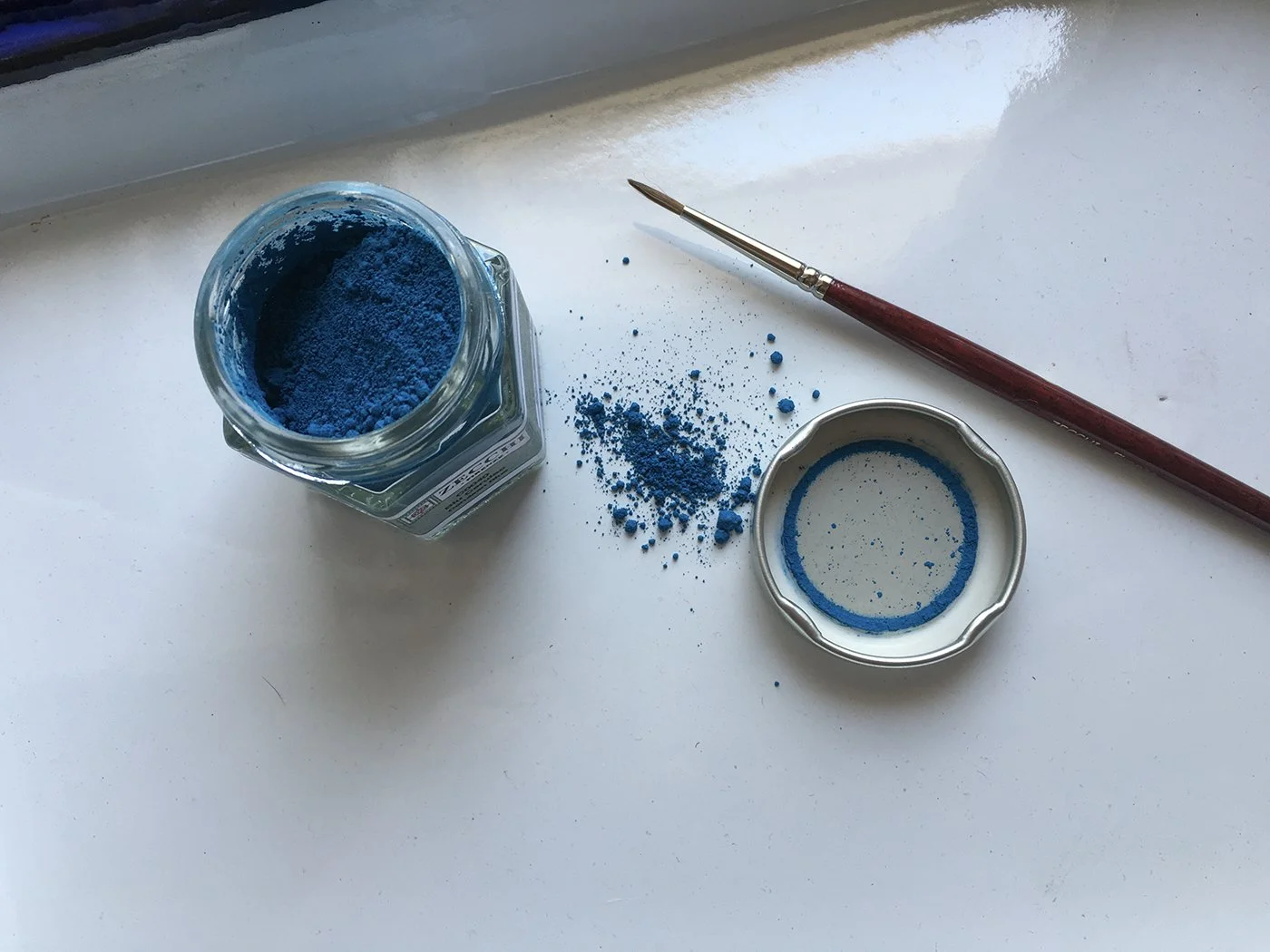
Zecchi watercolor pigments from Florence, Italy